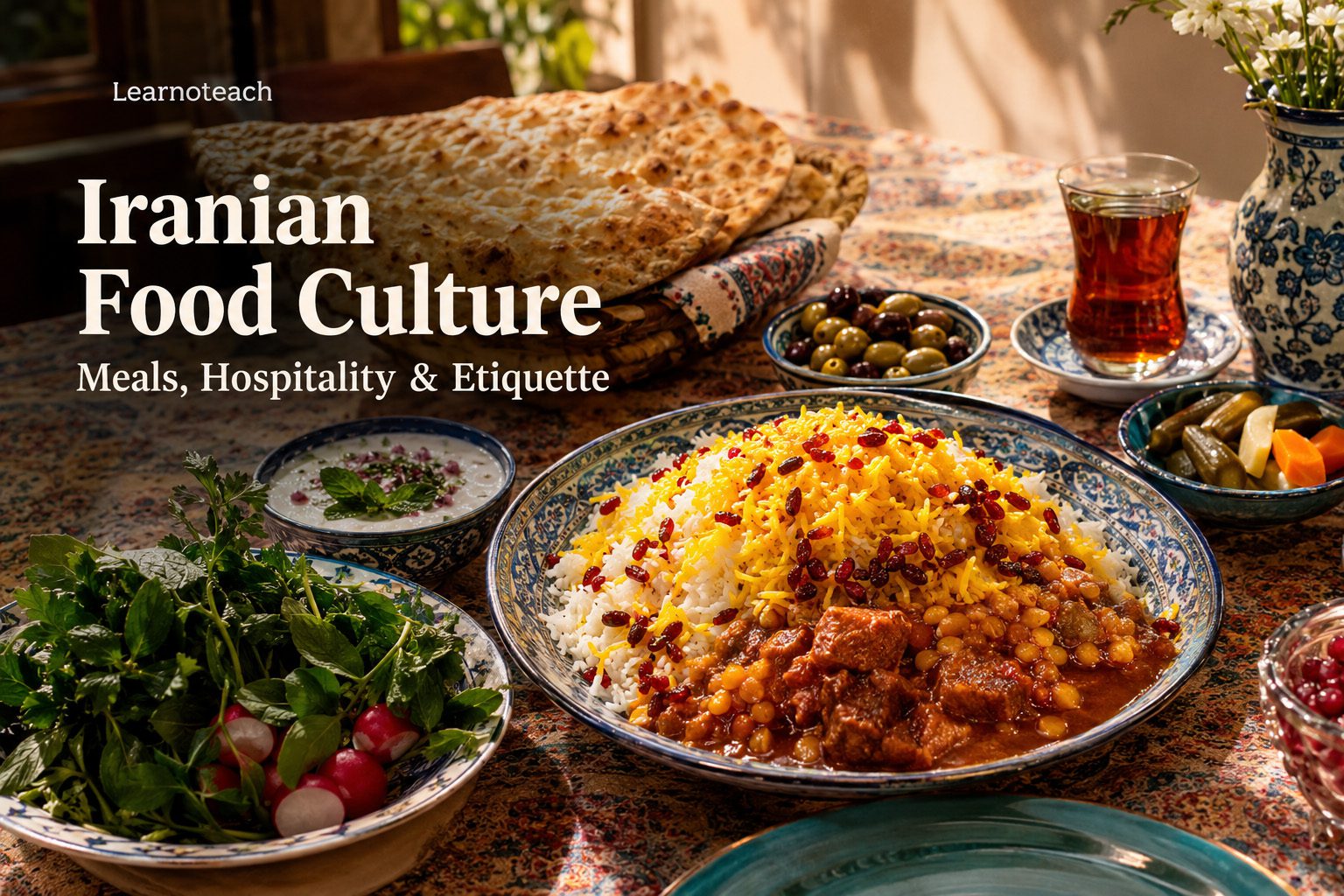
In Iran, food means much more than preparing and sharing meals. It brings families together, welcomes guests, marks important occasions, and creates opportunities to strengthen relationships. From a family gathering around a traditional Persian meal to a simple cup of tea shared with a friend, food plays an important role in everyday Iranian life.
Iranian food culture reflects the country’s history, regional diversity, and traditions of generosity. Families often gather around the table to share stories, enjoy each other’s company, and celebrate special moments. Preparing food for guests is also a meaningful way to show care and respect.
If you want to discover the dishes and ingredients behind this culture, explore our guide to traditional Iranian food for beginners.
Food also offers an enjoyable way to learn Persian (Farsi). By understanding how Iranians welcome guests, talk around the dinner table, and express appreciation, you can discover how language and culture connect in everyday life.
1. The Importance of Meals in Iranian Culture
In many Iranian households, meals give family members an opportunity to spend time together. Lunch and dinner often become social occasions where people discuss their day, share stories, and enjoy each other’s company.
Family gatherings, celebrations, and visits from relatives may involve several dishes rather than a single meal. Preparing and sharing food helps create a welcoming atmosphere.
Food also plays an important role in hospitality. When guests arrive, hosts may offer tea, fruit, sweets, or a complete meal, depending on the occasion.
For many families, cooking for someone is a practical way to express affection. Preparing a favorite dish, offering another serving, or sending food home with a guest can all communicate care and generosity.
Breakfast, Lunch, and Dinner
Eating habits vary between households and individuals, but some traditional patterns remain common in Iran.
Breakfast: A traditional Iranian breakfast may include fresh bread, white cheese, walnuts, cucumbers, tomatoes, and tea. Honey, jam, butter, and eggs are also popular choices.
Lunch: Lunch is an important meal in many Iranian households. Families often enjoy rice with a stew, grilled meat, or another main dish. Fresh herbs, yogurt, pickles, and salads may accompany the meal.
Dinner: Dinner can be a full family meal or something simpler. Depending on the household, people may enjoy rice and stew, bread with cheese and herbs, soup, or leftovers from lunch.
Modern lifestyles have changed eating routines, especially in larger cities. Not every Iranian family follows the same schedule or meal pattern.
2. The Art of Iranian Hospitality
Hospitality is one of the most recognizable aspects of Iranian social culture. Hosts often welcome guests warmly and make an effort to help them feel comfortable.
An invitation to an Iranian home may involve preparing several dishes, arranging fruit and sweets, making tea, and ensuring that everyone has enough to eat.
In many households, the host may encourage guests to take more food even after they say they are full. This behavior often expresses generosity rather than a literal expectation that guests must finish everything offered.
Why Do Iranian Hosts Offer So Much Food?
Offering plenty of food communicates that guests are valued and welcome. Hosts may prepare more than they expect everyone to eat because they want their visitors to feel comfortable and well cared for.
The social meaning of hospitality matters: the effort behind preparing and serving a meal can be just as important as the food itself.
Customs differ between families, generations, and social settings. Some households follow elaborate traditions, while others take a more relaxed approach.
What Should You Do When Invited to an Iranian Home?
If someone invites you to an Iranian home, a few simple gestures can help you navigate the experience respectfully.
- Bring a small gift: Flowers, sweets, or pastries can make thoughtful gifts for many social visits.
- Follow the host’s lead: Observe where others sit and how the meal begins.
- Compliment the food sincerely: Tell your host what you enjoyed.
- Accept hospitality graciously: Tea, fruit, or another small offering may form part of the welcome.
- Respect household customs: Many Iranian families expect guests to remove their shoes at the entrance.
These suggestions offer general guidance, not universal rules. Observe your host and ask politely if you are unsure.
3. Understanding Taarof: The Persian Art of Politeness
One of the most interesting aspects of Iranian social etiquette is taarof (تعارف).
Taarof is a system of ritual politeness through which people express respect, modesty, and generosity. It can influence greetings, invitations, offers of food, and everyday conversations. Its meaning depends on the context, the relationship, and the people involved.
How Does Taarof Work at the Dinner Table?
Imagine that you are visiting an Iranian friend. Your host offers you another serving of rice or stew.
You might initially respond:
Na, mamnoon! (نه، ممنون!)
This means, “No, thank you!”
Your host may then encourage you to have some more. In some situations, this exchange forms part of a polite negotiation rather than a straightforward refusal.
However, no universal rule requires you to refuse a specific number of times. Some people follow this custom more than others, and close friends may skip it entirely.
If you are genuinely full, you can politely decline. You do not need to keep eating simply because your host insists.
Understanding taarof can help visitors interpret certain social interactions without feeling confused or pressured.
4. Iranian Dining Etiquette: What to Expect
Iranian dining etiquette varies according to family traditions, personal preferences, and the setting. A meal at someone’s home may follow different customs from a restaurant or formal gathering.
Nevertheless, a few common practices can help visitors feel more comfortable.
Wait for the Host to Invite You to Eat
At a traditional gathering, the host may invite everyone to begin eating by saying befarmāid (بفرمایید).
You can wait for the invitation and then follow the lead of the other guests. In casual settings, everyone may simply start eating together.
Share Dishes When Appropriate
Some Iranian meals feature several dishes placed in the center of the table. Guests may share side dishes or take portions of the main dishes.
In other settings, each person receives an individual plate. Pay attention to how people serve the food and follow the household’s usual practice.
Use Your Right Hand When Appropriate
In some traditional settings, people prefer using the right hand when handling shared bread or passing food. Cutlery remains widely used, particularly in contemporary homes and restaurants.
Follow the customs of the people around you rather than assuming every household follows the same rules.
Show Appreciation for the Food
A sincere compliment makes a thoughtful gesture when someone has prepared a meal for you.
You could say:
Kheyli khoshmaze bood! (خیلی خوشمزه بود!)
This means, “It was very delicious!”
You can also thank your host for the invitation and the meal.
Do Not Worry About Getting Everything Perfect
Cultural etiquette is not a test. Most hosts appreciate visitors who show interest in their traditions and make an effort to behave respectfully.
If you make a small mistake, a friendly attitude and a willingness to learn usually matter more than knowing every custom in advance.
5. Tea, Sweets, and the Tradition of Spending Time Together
Tea, known as chai (چای), holds a special place in everyday social life in Iran.
People may serve tea when guests arrive, after a meal, during a conversation, or simply as part of an ordinary afternoon at home.
Hosts often offer tea with sugar cubes, dates, sweets, or pastries. Depending on the occasion, they may also serve fresh fruit, nuts, and other snacks.
Why Is Tea So Important?
Tea offers more than a drink. It creates an opportunity to pause, talk, and spend time together.
When you visit an Iranian household, your host may offer tea even if you plan to stay for only a short time. During longer visits, you may enjoy more than one cup.
A cup of tea can also mark the transition from a meal to a relaxed conversation.
For Persian learners, these everyday moments offer opportunities to practice greetings, expressions of gratitude, and informal conversation.
6. Regional Differences in Iranian Food Culture
Iran is a large country with varied climates, landscapes, and cultural traditions. These differences influence local food customs, family recipes, and the way people prepare meals.
Northern regions, particularly around the Caspian Sea, have strong traditions involving fresh herbs, vegetables, and fish. Southern coastal communities often use seafood and regional spice combinations. Western and central provinces also maintain distinctive food traditions.
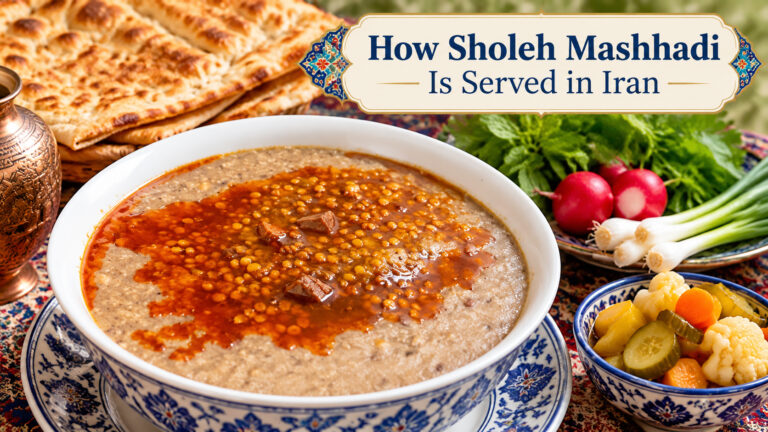
Khorasan, in northeastern Iran, has its own culinary identity and regional specialties. For example, Sholeh Mashhadi represents one of the traditional dishes associated with Mashhad.
These differences remind us that no single dish or dining custom represents every Iranian household. Local traditions, family preferences, and personal lifestyles all shape the experience of food.
For a closer look at regional dishes and ingredients, read our guide to traditional Iranian food.
7. Food and Celebrations in Iran
Food plays an important role in Iranian celebrations and seasonal traditions. Families often prepare special dishes, share sweets, and gather around the table to mark important occasions.
Nowruz: The Persian New Year
Nowruz, the Persian New Year, marks the arrival of spring and brings families together across Iran and other communities that celebrate the occasion.
Families visit relatives, share festive meals, and enjoy sweets and snacks. Sabzi Polo ba Mahi, a rice dish prepared with herbs and commonly served with fish, has a strong connection with Nowruz in many Iranian households, although traditions vary.
Yalda Night
Yalda Night takes place on the longest night of the year. Families and friends gather to share food, tell stories, read poetry, and enjoy each other’s company.
Common foods include watermelon, pomegranates, nuts, and sweets. These gatherings often continue late into the night.
Weddings and Family Gatherings
Weddings, engagements, and other celebrations often feature elaborate meals. The dishes depend on regional traditions, family preferences, and the scale of the event.
Sharing food becomes part of the celebration itself, helping relatives and friends connect.
8. Learn Persian Through Food and Everyday Culture
Food offers an excellent starting point for learning Persian because it connects vocabulary with real-life situations.
Instead of memorizing isolated words, you can learn expressions while imagining yourself ordering food, visiting a friend, or complimenting a meal.
Start with a few useful words:
| Persian | Pronunciation | English |
|---|---|---|
| غذا | Ghazâ | Food |
| نان | Nân | Bread |
| برنج | Berenj | Rice |
| آب | Âb | Water |
| چای | Chây | Tea |
| دوغ | Doogh | A traditional yogurt-based drink |
| خوشمزه | Khoshmaze | Delicious |
| ممنون | Mamnoon | Thank you |
| بفرمایید | Befarmâid | Please, go ahead, or help yourself |
You can also practice these expressions:
In ghazâ kheili khoshmaze ast.
این غذا خیلی خوشمزه است.
“This food is very delicious.”
Ye livân chây, lotfan.
یه لیوان چای، لطفاً.
“A glass of tea, please.”
If you are new to Persian, start with our guide to learning Persian for beginners. You can also learn the script with this beginner’s guide to reading the Persian alphabet.
Building a foundation in vocabulary and pronunciation will make it easier to use these expressions naturally in real conversations.
Take Your Persian Further with a Native Teacher
Reading about Iranian culture is a great start, but practicing with a native speaker can help you understand natural expressions, pronunciation, and the social context behind everyday phrases.
You can book a private online Persian lesson with a native Iranian teacher and focus on the language skills that matter most to your goals.
You can also explore the Persian language courses on Learnoteach to continue learning at your own pace.
9. How to Experience Iranian Food Culture as a Visitor
If you visit Iran or share a meal with an Iranian family abroad, approach the experience with curiosity and respect.
Here are a few practical suggestions:
- Try traditional dishes beyond the most internationally famous foods.
- Ask about the ingredients and the story behind a dish.
- Learn a few Persian expressions related to food and hospitality.
- Observe how your hosts offer food and interact with guests.
- Respect dietary restrictions and communicate your needs politely.
- Remember that individual preferences and family customs differ.
You do not need to memorize every rule to appreciate Iranian culture. A genuine interest in the food, language, and people can make the experience more meaningful.
For more cultural insights, language tips, and educational content, visit the Learnoteach blog. You can also follow Learnoteach on Instagram and TikTok for short Persian lessons and cultural discoveries.
Conclusion: Food Is a Language of Its Own
Iranian food culture brings together hospitality, family, regional traditions, and social connections. A meal can express affection, welcome a guest, or bring people together to celebrate an important moment.
Understanding customs such as taarof, the tradition of offering tea, and the importance of sharing food can help visitors appreciate the meaning behind everyday interactions.
For Persian learners, these traditions also reveal how closely language and culture connect. Words such as befarmāid, nooshe jân, and mamnoon are more than vocabulary items; people use them to make everyday interactions warmer and more meaningful.
The next time you enjoy Persian food, remember that you are experiencing more than a collection of ingredients and recipes. You are discovering a culture in which sharing a meal can be a way of saying, “You are welcome here.”
Start your journey with Learnoteach and discover how learning Persian can open the door to a deeper understanding of Iranian culture.