Sholeh Mashhadi is more than just a traditional Persian dish. It is an important part of the food culture and hospitality of Mashhad, a historic city in northeastern Iran. Known for its thick texture, rich flavor, and combination of meat, grains, legumes, and aromatic spices, this traditional food has a special place in Iranian culinary traditions.
But have you ever wondered how Sholeh Mashhadi is served in Iran?
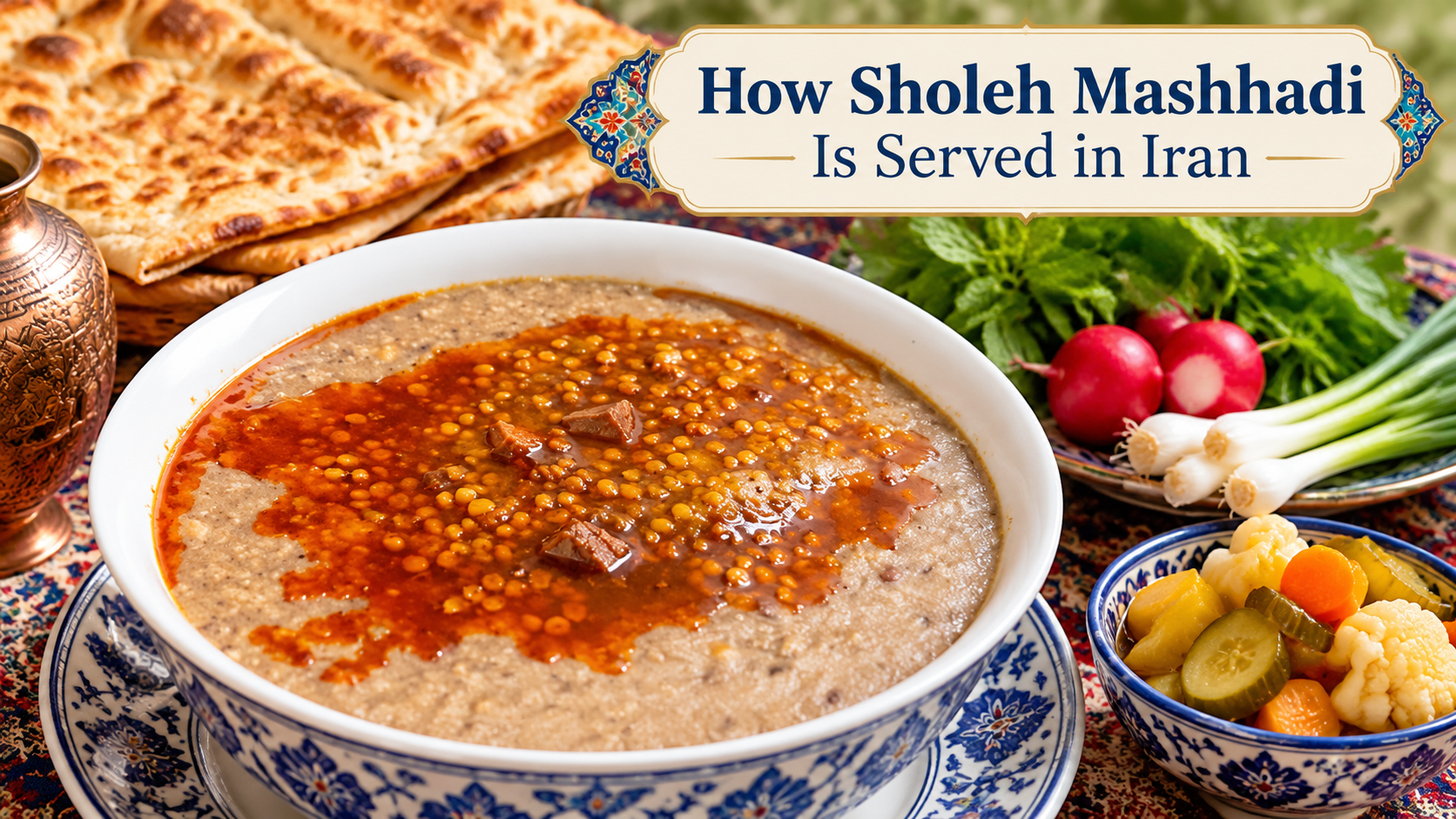
Unlike many everyday Persian meals, Sholeh Mashhadi is often associated with religious ceremonies, family gatherings, and traditional celebrations. Its serving style is also distinctive, especially because of the delicious Gheymeh stew traditionally added on top.
From freshly baked Sangak bread to aromatic spices and fresh herbs, every part of the serving experience reflects the hospitality and culinary heritage of Mashhad.
In this article, we will explore how people traditionally serve and enjoy Sholeh Mashhadi in Iran, what foods accompany it, and why this famous dish has such cultural importance.
1. Sholeh Mashhadi Is Usually Served Hot
One of the most important things about serving Sholeh Mashhadi is its temperature and consistency.
Sholeh Mashhadi is traditionally served hot, immediately after its long cooking process. It has a thick, smooth, and slightly elastic texture, somewhere between a hearty porridge and a traditional Persian stew.
Unlike ordinary soups, it is not watery. Its ingredients are cooked together for several hours until the grains, legumes, and meat become thoroughly combined.
The final result is a rich and filling dish with a distinctive texture.
In Mashhad, Sholeh is generally served in individual bowls or deep plates. Because it is a substantial meal, even a moderate portion can be satisfying.
Serving it hot also helps preserve its delicious aroma, especially the fragrance of traditional spices such as black pepper, ginger, cinnamon, cardamom, and nutmeg.
2. Gheymeh Stew Is Traditionally Served on Top
One of the most recognizable features of traditional Sholeh Mashhadi is its famous Gheymeh topping.
In many traditional servings, a small amount of Persian Gheymeh stew is placed directly on top of the Sholeh.
Gheymeh is a popular Iranian stew usually prepared with yellow split peas, meat, onions, tomato paste, and dried lime. Depending on the recipe and occasion, it may also include fried potatoes.
When Gheymeh is added to Sholeh Mashhadi, it creates a delicious combination of flavors and textures.
The rich, slightly tangy taste of Gheymeh complements the thick and savory Sholeh underneath. The contrast makes the dish even more enjoyable.
The topping is generally added in a relatively small quantity rather than covering the entire portion with a large amount of stew.
For many people in Mashhad, Sholeh without its traditional Gheymeh topping feels incomplete.
If you enjoy traditional Persian stews, you can explore more Iranian cooking lessons and recipes in the Learnoteach Courses section.
3. Sangak Bread Is a Traditional Accompaniment
Fresh Persian bread is an important part of Iranian food culture, and Sangak is one of the traditional breads served alongside Sholeh Mashhadi.
Sangak is a flatbread traditionally baked in a special oven over small stones. It has a slightly chewy texture, a distinctive flavor, and an irregular surface.
Its delicious taste makes it an excellent accompaniment to rich Persian dishes.
When Sholeh Mashhadi is served, people may place pieces of Sangak bread beside their bowls. Some enjoy eating small pieces of bread between spoonfuls of Sholeh, while others use it to accompany the meal.
The combination of warm Sholeh and freshly baked Sangak creates a satisfying traditional Iranian dining experience.
Sangak is not simply a side dish. It represents an important part of everyday Persian eating habits and hospitality.
4. Fresh Herbs and Vegetables Add Freshness
Iranian meals are often accompanied by fresh herbs and vegetables, traditionally known as Sabzi Khordan.
Sholeh Mashhadi is a rich and filling dish, so fresh ingredients provide a pleasant contrast to its thick consistency and savory flavor.
Depending on availability and personal preference, a traditional herb platter may include:
- Fresh mint
- Basil
- Parsley
- Radishes
- Spring onions
- Tarragon
- Fresh coriander
These herbs are usually washed and arranged on a serving plate.
Some people enjoy eating them between bites of Sholeh, while others combine them with small pieces of bread.
Fresh herbs add freshness and variety to the meal, balancing the richness of the traditional dish.
This combination also reflects a common characteristic of Persian cuisine: serving fresh herbs and vegetables alongside hearty cooked foods.
5. Pickles and Other Traditional Side Dishes
Another popular accompaniment to traditional Iranian meals is Torshi, a type of Persian pickle.
Torshi is prepared using vegetables, vinegar, salt, and different spices. Its flavor can range from mildly sour to strongly tangy.
Because Sholeh Mashhadi has a rich and substantial taste, some people enjoy eating it with a small amount of pickles.
Depending on the household and serving occasion, other simple accompaniments may also be offered.
These can include:
- Persian vegetable pickles
- Fresh onions
- Radishes
- Seasonal vegetables
- Fresh herbs
However, the exact side dishes are not always the same. Serving traditions can vary between families and different parts of Khorasan.
The main focus remains on the Sholeh itself, often accompanied by Gheymeh and traditional Persian bread.
6. Sholeh Mashhadi Is Often Served During Religious Ceremonies
Sholeh Mashhadi has a particularly important place in the traditional and religious culture of Mashhad.
One of the most significant occasions when people prepare and distribute this dish is Muharram, especially during mourning ceremonies.
In Iranian culture, preparing and distributing food as a charitable offering is known as Nazri.
Families, religious groups, and local communities may prepare large quantities of food and distribute portions among participants, neighbors, and people in need.
Sholeh Mashhadi is one of the well-known traditional foods associated with this custom in Mashhad and the wider Razavi Khorasan region.
The preparation can involve large cooking pots and many people working together.
Because the dish requires considerable time, ingredients, and effort, preparing it for a large gathering is often a collective activity.
Sholeh is also associated with other traditional gatherings and special occasions. Its presence at these events reflects generosity, community spirit, and the importance of sharing food in Iranian culture.
7. It Is Usually Served as a Complete Main Course
Although Sholeh Mashhadi is sometimes categorized as a type of Ash (Persian thick soup), it is much heavier and richer than many ordinary Iranian soups.
It contains a combination of ingredients such as:
- Meat, usually lamb or beef
- Rice
- Bulgur wheat
- Chickpeas
- Pinto beans
- White beans
- Split peas
- Onions
- Traditional spices
These ingredients cook together over an extended period, creating a thick and filling meal.
For this reason, Sholeh Mashhadi is generally served as a main course rather than a starter.
A single bowl can provide a substantial meal, particularly when accompanied by Gheymeh and bread.
Unlike some Persian meals that are served with several separate dishes, Sholeh Mashhadi is traditionally enjoyed as the central feature of the meal.
8. Do People Eat Sholeh Mashhadi at Home or in Restaurants?
Sholeh Mashhadi is not necessarily an everyday homemade meal.
Traditional preparation takes considerable time and requires careful attention to the cooking process. The ingredients must become soft and blend together to create the characteristic texture.
In many cases, preparing Sholeh for large gatherings is easier when several people work together.
For this reason, it is particularly associated with religious ceremonies, community events, and special occasions.
However, people can also find Sholeh Mashhadi in specialized traditional food establishments and restaurants in Mashhad.
Some families prepare smaller quantities at home, especially when they want to enjoy this regional specialty.
Whether prepared in a large communal pot or a smaller household kitchen, the essential characteristics remain the same: a thick texture, rich ingredients, warming spices, and the traditional Gheymeh topping.
9. What Makes the Traditional Serving Style Special?
The traditional way of serving Sholeh Mashhadi is special because it combines food with cultural identity.
Every accompaniment has a purpose.
Gheymeh adds another layer of flavor. Sangak provides a traditional bread accompaniment. Fresh herbs offer freshness, while pickles introduce a pleasant tangy contrast.
However, the most important aspect is the tradition of sharing.
In Mashhad, Sholeh is strongly connected with hospitality and communal gatherings. It is a dish that people prepare in large quantities to share with others.
This is particularly meaningful during Nazri traditions, when distributing food is considered an expression of generosity and charity.
For international visitors interested in Iranian cuisine, tasting Sholeh Mashhadi is an opportunity to discover more than a regional recipe. It is also a way to experience the traditions and hospitality of northeastern Iran.
10. Where Can You Learn to Make Authentic Sholeh Mashhadi?
If reading about Sholeh Mashhadi has made you curious about its preparation, learning the recipe is the next step.
Although its ingredients may seem familiar, preparing authentic Sholeh Mashhadi requires patience, the correct proportions, and an understanding of its traditional cooking process.
The combination of grains, legumes, meat, and spices must be cooked carefully to achieve the characteristic thick and cohesive texture.
At Learnoteach, you can explore traditional Persian cooking and discover recipes from different regions of Iran.
Start with our dedicated Sholeh Mashhadi Recipe Course to learn more about this famous traditional dish.
You can also discover additional free Iranian recipes and explore other cooking lessons through our online courses.
If you are interested in learning Persian while discovering Iranian culture, you can also book an online class with native Persian teacher Mojgan Jafari.
Through conversations about traditional food, regional customs, and everyday life, you can improve your Persian language skills while learning more about Iran.
Conclusion: More Than a Traditional Persian Dish
Sholeh Mashhadi is one of the most distinctive traditional foods of northeastern Iran.
It is usually served hot as a complete main course, often accompanied by a small portion of Gheymeh stew, fresh Sangak bread, herbs, and sometimes pickles.
Its connection with religious ceremonies, charitable food distribution, and traditional gatherings makes it much more than an ordinary meal.
For the people of Mashhad, Sholeh represents local identity, hospitality, and the tradition of sharing food with others.
If you ever visit Mashhad, trying an authentic bowl of Sholeh Mashhadi is an experience worth having.
And if you want to discover more about Persian food, language, and culture, visit Learnoteach, explore our latest articles, and follow us on social media:
Discover Iran one traditional dish at a time!