Persian cuisine is one of the most enjoyable ways to explore the Persian language. Whether you are reading a restaurant menu in Tehran, following a traditional recipe for Ghormeh Sabzi, or shopping for ingredients at a Persian grocery store, understanding food-related vocabulary makes everyday experiences much easier.
In this guide, you will learn over 100 essential Persian food words and expressions, with English translations and pronunciation guides designed for English speakers. The vocabulary is organized into practical categories, including cooking verbs, ingredients, meat, traditional dishes, fruits, desserts, and useful restaurant phrases.
Rather than memorizing unrelated words, you will learn vocabulary in the context of real situations. This makes it easier to recognize words in recipes, understand conversations, and eventually use them yourself.
Let’s start with the words you are most likely to encounter in a Persian kitchen.
1. Cooking Verbs and Kitchen Actions
Knowing the names of ingredients is useful, but understanding cooking instructions is just as important. Persian recipes frequently use compound verbs, combining a noun with a simple verb to describe a specific action.
Here are some of the most common cooking verbs:
| Persian | Pronunciation | English |
|---|---|---|
| خرد کردن | Khord kardan | To chop |
| ریز کردن | Riz kardan | To finely chop |
| سرخ کردن | Sorkh kardan | To fry |
| جوشاندن | Jooshāndan | To boil |
| پختن | Pokhtan | To cook |
| کباب کردن | Kabāb kardan | To grill |
| بخارپز کردن | Bokhār-paz kardan | To steam |
| هم زدن | Ham zadan | To stir / mix |
| پوست کندن | Poost kandan | To peel |
| چشیدن | Cheshidan | To taste |
| اضافه کردن | Ezāfe kardan | To add |
| ریختن | Rikhtan | To pour |
| مخلوط کردن | Makhlut kardan | To combine / mix |
| ورز دادن | Varz dādan | To knead |
| دم کردن | Dam kardan | To steam / brew |
| گرم کردن | Garm kardan | To heat |
| تفت دادن | Taft dādan | To sauté |
Some expressions are especially useful when following Persian recipes:
- روی حرارت ملایم بپزید (Rooye harārat-e molāyem bepazid) — Cook over low heat.
- بذار جا بیفته (Bezār jā biofte) — Let it cook until the flavors develop.
- خوب هم بزنید (Khoob ham bezanid) — Stir well.
- به مقدار لازم اضافه کنید (Be meghdār-e lāzem ezāfe konid) — Add as needed.
- آماده است (Āmāde ast) — It’s ready.
One particularly useful expression is جا افتادن (jā oftādan). When someone says a stew needs more time to jā biofte, they mean it needs to cook longer so that its ingredients and flavors come together. This expression is frequently used when preparing traditional Persian stews.
2. Essential Persian Ingredients and Pantry Staples
Persian cooking uses a combination of fresh herbs, vegetables, legumes, rice, dairy products, and aromatic spices. Many traditional dishes depend on these ingredients for their distinctive flavors.
Rice, Grains, and Legumes
Rice is central to many Persian meals, particularly lunch and dinner.
| Persian | Pronunciation | English |
|---|---|---|
| برنج | Berenj | Rice |
| چلو | Chelo | Plain Persian rice |
| پلو | Polo | Rice dish, often cooked with other ingredients |
| رشته | Reshteh | Noodles |
| گندم | Gandom | Wheat |
| لوبیا | Loobia | Beans |
| نخود | Nokhod | Chickpeas |
| عدس | Adas | Lentils |
| لپه | Lapeh | Split peas |
| ماش | Māsh | Mung beans |
There is an important distinction between Chelo and Polo.
Chelo generally refers to plain steamed Persian rice, often served alongside kebab or stew. Polo usually refers to rice prepared with other ingredients, such as vegetables, beans, or meat.
For example:
- چلو کباب (Chelo Kabāb) — Kebab served with plain rice.
- باقالی پلو (Bāghāli Polo) — Rice with fava beans and dill.
- لوبیا پلو (Loobia Polo) — Rice with green beans and meat.
- زرشک پلو (Zereshk Polo) — Rice with barberries.
Vegetables and Fresh Herbs
Fresh herbs are particularly important in Iranian cuisine. They are used in stews, rice dishes, soups, salads, and as fresh accompaniments to meals.
| Persian | Pronunciation | English |
|---|---|---|
| سبزی | Sabzi | Herbs / greens |
| جعفری | Ja’fari | Parsley |
| گشنیز | Geshniz | Cilantro |
| شوید | Shevid | Dill |
| نعناع | Na’nā | Mint |
| ترخون | Tarkhoon | Tarragon |
| شنبلیله | Shanbalileh | Fenugreek |
| پیاز | Piaz | Onion |
| سیر | Sir | Garlic |
| گوجه فرنگی | Gojeh Farangi | Tomato |
| خیار | Khiār | Cucumber |
| بادمجان | Bādemjān | Eggplant |
| سیب زمینی | Sib Zamini | Potato |
| هویج | Havij | Carrot |
| اسفناج | Esfenāj | Spinach |
| کدو | Kadoo | Squash / zucchini |
| کاهو | Kāhoo | Lettuce |
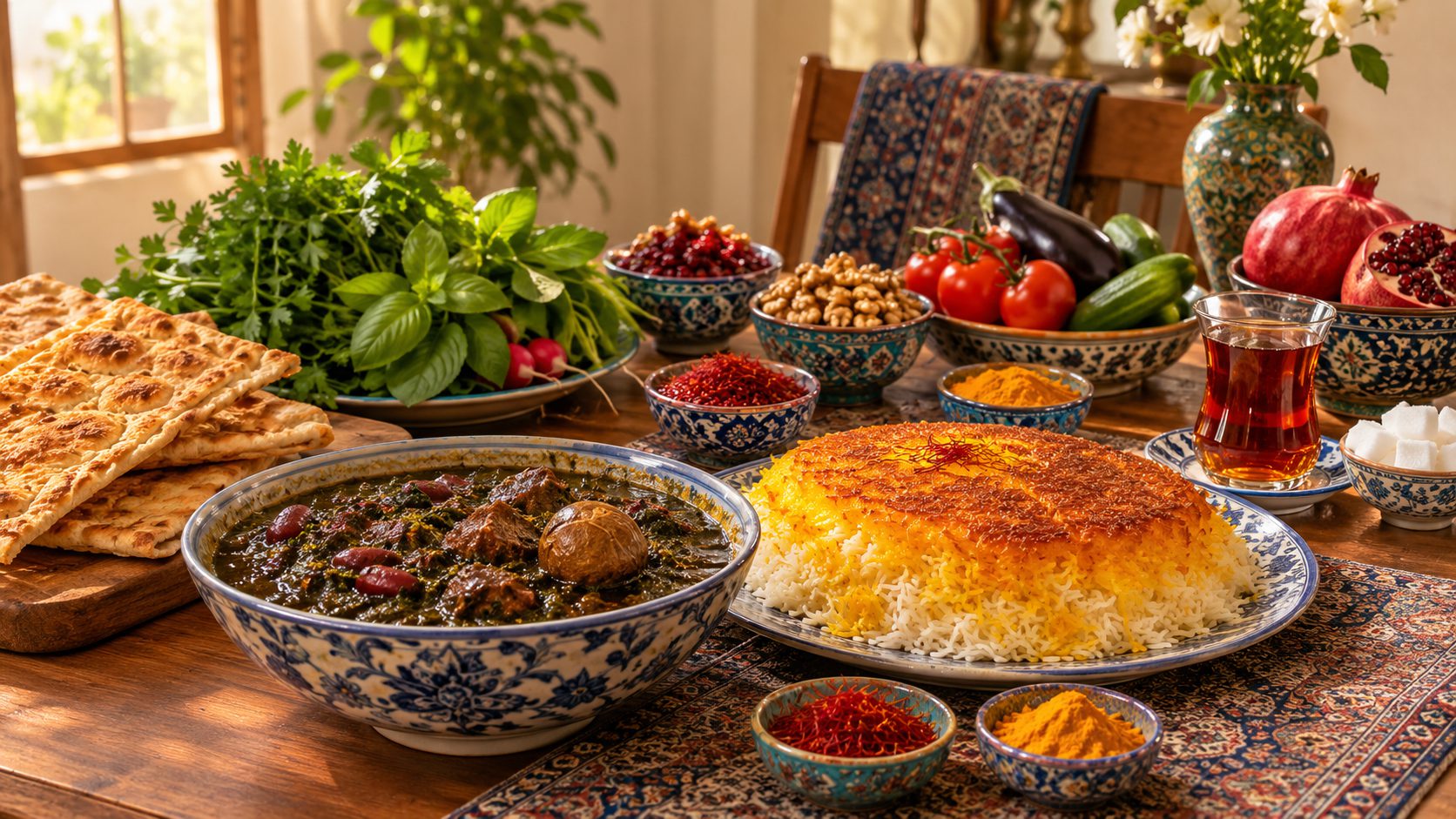
Cultural note: You will often see Sabzi Khordan (سبزی خوردن) served alongside Persian meals. It is a plate of fresh herbs and vegetables, commonly including mint, basil, radishes, and spring onions. It is an important part of traditional Iranian dining.
Dairy Products and Cooking Fats
| Persian | Pronunciation | English |
|---|---|---|
| ماست | Māst | Yogurt |
| پنیر | Panir | Cheese |
| خامه | Khāmeh | Cream |
| شیر | Shir | Milk |
| کره | Kareh | Butter |
| روغن | Roghan | Oil |
| روغن زیتون | Roghan-e Zeytoon | Olive oil |
| دوغ | Doogh | Savory yogurt drink |
Spices and Seasonings
Persian food is known for its aromatic spices and balanced flavors. Some ingredients are particularly important in traditional stews and rice dishes.
| Persian | Pronunciation | English |
|---|---|---|
| نمک | Namak | Salt |
| فلفل | Felfel | Pepper |
| زردچوبه | Zardchoobeh | Turmeric |
| دارچین | Dārchin | Cinnamon |
| زعفران | Zaferān | Saffron |
| زیره | Zireh | Cumin |
| سماق | Somāgh | Sumac |
| گل محمدی | Gol-e Mohammadi | Dried rose petals |
| لیمو عمانی | Limoo Amani | Dried lime |
| رب گوجه فرنگی | Rob-e Gojeh Farangi | Tomato paste |
| رب انار | Rob-e Anār | Pomegranate paste |
Two ingredients deserve special attention: saffron and dried lime.
Saffron gives many Persian rice dishes their characteristic golden color and delicate aroma. Dried lime, meanwhile, adds a distinctive sour flavor to popular dishes such as Ghormeh Sabzi and Gheimeh.
3. Meat, Poultry, and Seafood
If you enjoy Persian kebabs and traditional stews, these words will be particularly useful when reading menus or shopping for ingredients.
| Persian | Pronunciation | English |
|---|---|---|
| گوشت | Goosht | Meat |
| گوشت گاو | Goosht-e Gāv | Beef |
| گوشت گوسفند | Goosht-e Gosfand | Lamb / mutton |
| مرغ | Morgh | Chicken |
| ماهی | Māhi | Fish |
| میگو | Meygoo | Shrimp |
| گوشت چرخ کرده | Goosht-e Charkh-karde | Ground meat |
| گوشت گوساله | Goosht-e Gousāleh | Veal |
| جوجه | Joojeh | Chicken pieces |
| دنده | Dandeh | Ribs |
| مغز استخوان | Maghz-e Ostokhān | Bone marrow |
| تن ماهی | Ton-e Māhi | Canned tuna |
Popular Persian Kebabs
Kebab is one of the most recognizable parts of Iranian cuisine. Different types have their own names, ingredients, and preparation methods.
- کباب کوبیده (Kabāb Koobideh) — Seasoned ground meat grilled on flat skewers.
- جوجه کباب (Joojeh Kabāb) — Grilled chicken, usually marinated with saffron, lemon, and spices.
- کباب برگ (Kabāb-e Barg) — Grilled thin slices of tender meat, traditionally prepared from lamb or beef.
- کباب چنجه (Kabāb-e Chenjeh) — Grilled chunks of marinated meat.
- کباب بختیاری (Kabāb-e Bakhtiāri) — A combination of chicken and red meat grilled on a skewer.
Learning these names will make ordering at a traditional Persian restaurant much easier.
4. Traditional Persian Dishes and Prepared Foods
Persian cuisine has an impressive variety of stews, rice dishes, soups, and traditional meals. Learning their names also introduces you to some important aspects of Iranian food culture.
Persian Stews (Khoresht)
The word خورش (Khoresht) refers to a traditional Persian stew. You may also encounter the spelling Khoresh or the colloquial form Khoresht.
Some of the best-known examples include:
| Persian | Pronunciation | English Description |
|---|---|---|
| قورمه سبزی | Ghormeh Sabzi | Herb stew with meat and beans |
| فسنجان | Fesenjān | Walnut and pomegranate stew |
| قیمه | Gheimeh | Split-pea and tomato stew |
| خورش بادمجان | Khoresht-e Bādemjān | Eggplant stew |
| خورش کرفس | Khoresht-e Karafs | Celery stew |
| آلو اسفناج | Āloo Esfenāj | Plum and spinach stew |
Ghormeh Sabzi is one of Iran’s most beloved traditional dishes. It combines fresh herbs, kidney beans, meat, and dried lime to create a rich and distinctive flavor.
Fesenjan is another famous dish, prepared with ground walnuts and pomegranate paste. Its flavor can range from sweet to sour, depending on the recipe.
Other Traditional Persian Foods
| Persian | Pronunciation | English Description |
|---|---|---|
| آبگوشت | Ābgoosht | Traditional meat and chickpea stew |
| دیزی | Dizi | Traditional stone-pot preparation of abgoosht |
| آش | Āsh | Traditional thick soup |
| آش رشته | Āsh Reshteh | Herb and bean soup with noodles |
| حلیم | Halim | Slow-cooked wheat and meat porridge |
| کوکو سبزی | Kookoo Sabzi | Persian herb frittata |
| کشک بادمجان | Kashk-e Bādemjān | Eggplant dip with whey |
| میرزا قاسمی | Mirzā Ghasemi | Smoked eggplant and tomato dish |
| کله پاچه | Kaleh Pācheh | Traditional sheep’s head and feet dish |
| ته چین | Tahchin | Saffron rice cake, often with chicken |
Special Dishes for Iranian Celebrations
Food also plays an important role in Iranian celebrations and family gatherings.
- سبزی پلو با ماهی (Sabzi Polo bā Māhi) — Herb rice served with fish, traditionally associated with Nowruz, the Persian New Year.
- شیرین پلو (Shirin Polo) — Sweet rice prepared with ingredients such as orange peel, nuts, and sometimes chicken.
- عدس پلو (Adas Polo) — Rice with lentils, often served with raisins.
- رشته پلو (Reshteh Polo) — Rice cooked with toasted noodles, often prepared for special occasions.
Knowing these dish names can help you understand restaurant menus and conversations about Iranian celebrations.
5. Fruits, Nuts, and Persian Sweets
Fruit and nuts are common in Iranian households. They are enjoyed as snacks, served to guests, and incorporated into traditional meals and desserts.
Fruits and Dried Fruits
| Persian | Pronunciation | English |
|---|---|---|
| سیب | Sib | Apple |
| پرتقال | Porteghāl | Orange |
| انار | Anār | Pomegranate |
| انگور | Angoor | Grapes |
| هندوانه | Hendavāneh | Watermelon |
| خربزه | Kharbozeh | Melon |
| آلو | Āloo | Plum |
| خرما | Khormā | Dates |
| انجیر | Anjir | Fig |
| کشمش | Keshmesh | Raisins |
| توت | Toot | Mulberry |
| زردآلو | Zardāloo | Apricot |
| هلو | Holo | Peach |
| گیلاس | Gilās | Cherry |
| توت فرنگی | Toot Farangi | Strawberry |
Nuts
Nuts are especially popular during celebrations such as Nowruz and Yalda Night.
| Persian | Pronunciation | English |
|---|---|---|
| گردو | Gerdoo | Walnut |
| بادام | Bādām | Almond |
| پسته | Pesteh | Pistachio |
| فندق | Fandogh | Hazelnut |
| بادام زمینی | Bādām Zamini | Peanut |
| تخمه | Tokhmeh | Seeds |
Persian Desserts and Sweets
Persian desserts range from traditional rice puddings to refreshing frozen treats.
| Persian | Pronunciation | English |
|---|---|---|
| بستنی | Bastani | Ice cream |
| فالوده | Fāloodeh | Frozen dessert with thin starch noodles |
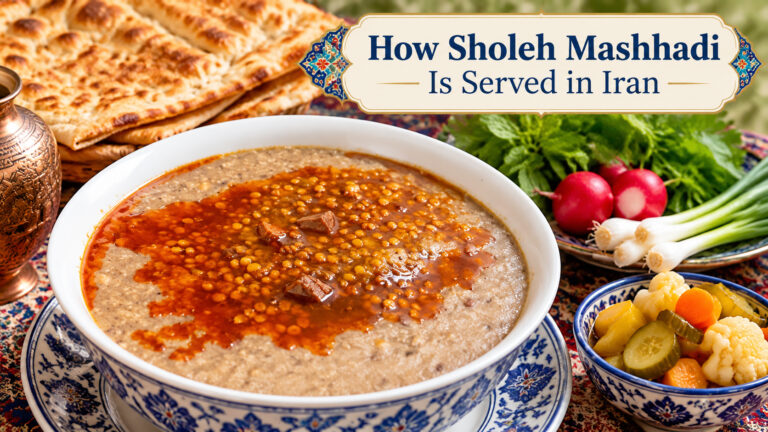
| شله زرد | Sholeh Zard | Persian saffron rice pudding |
| باقلوا | Bāghlavā | Baklava |
| زولبیا | Zoolbiā | Fried syrup-soaked sweet |
| بامیه | Bāmieh | Syrup-soaked fried pastry |
| سوهان | Soohan | Traditional saffron brittle |
| گز | Gaz | Persian nougat |
| حلوا | Halvā | Traditional sweet made with flour and syrup |
One particularly interesting dessert is Faloodeh, a traditional Iranian frozen dessert made with thin starch noodles, sugar syrup, and often rosewater and lime juice. It is especially popular in Shiraz.
6. Tea, Drinks, and Dining Essentials
Tea is an essential part of Iranian social life. It is commonly served when guests arrive, during conversations, and after meals.
Here are some useful words related to Persian drinks and dining:
| Persian | Pronunciation | English |
|---|---|---|
| چای | Chāy | Tea |
| قند | Ghand | Sugar cube |
| شکر | Shekar | Sugar |
| استکان | Estekān | Small tea glass |
| سماور | Samāvar | Samovar |
| نوشیدنی | Nooshidani | Beverage |
| آب | Āb | Water |
| آب معدنی | Āb-e Ma’dani | Bottled mineral water |
| آبمیوه | Āb Miveh | Fruit juice |
| نان | Nān | Bread |
| سفره | Sofreh | Dining spread / tablecloth |
| بشقاب | Boshghāb | Plate |
| قاشق | Ghāshogh | Spoon |
| چنگال | Changāl | Fork |
| چاقو | Chāghoo | Knife |
| لیوان | Livān | Glass |
| فنجان | Fenjān | Cup |
An important expression to remember is نوش جان (Nooshe Jān). It is commonly said before or during a meal and expresses the wish that someone enjoys their food. It is similar to “Enjoy your meal” or “Bon appétit.”
7. Useful Persian Phrases for Restaurants
Knowing individual words is helpful, but being able to use complete sentences makes a much bigger difference when communicating.
Here are some practical expressions you can use when eating out in Iran.
| Persian | Pronunciation | English |
|---|---|---|
| منو لطفاً | Menu lotfan | The menu, please. |
| چی پیشنهاد میکنید؟ | Chi pishnahād mikonid? | What do you recommend? |
| این غذا چیه؟ | In ghazā chie? | What is this dish? |
| غذا تند است؟ | Ghazā tond ast? | Is the food spicy? |
| آب لطفاً | Āb lotfan | Water, please. |
| من گیاهخوار هستم | Man giyāhkhor hastam | I am vegetarian. |
| خیلی خوشمزه است | Kheyli khoshmaze ast | It’s very delicious. |
| صورتحساب لطفاً | Soorat-hesāb lotfan | The bill, please. |
| سیر شدم | Sir shodam | I’m full. |
| ممنون، عالی بود | Mamnoon, āli bood | Thank you, it was excellent. |
Three Expressions You Will Hear Frequently
1. نوش جان (Nooshe Jān)
This expression is used to wish someone an enjoyable meal. You will hear it in restaurants and Iranian homes.
2. بفرمایید (Befarmāid)
This is a polite and versatile expression. Depending on the situation, it can mean “Please,” “Go ahead,” “Here you are,” or “Help yourself.”
3. دست شما درد نکنه (Dast-e Shomā Dard Nakoneh)
Literally, this means “May your hand not hurt.” It is a common expression of appreciation, especially when someone has prepared food for you. In English, it is similar to saying “Thank you for the lovely meal.”
These expressions are not just vocabulary. They are also part of the politeness and hospitality that characterize many Iranian social interactions.
8. How to Learn Persian Food Vocabulary More Effectively
Memorizing a long list of words is rarely the best way to develop a new language skill. Instead, try connecting vocabulary to activities you already enjoy.
Here are four practical ways to learn Persian food vocabulary:
1. Learn Through a Recipe
Choose a familiar Persian dish, such as Ghormeh Sabzi, and learn the names of its ingredients and cooking instructions. When you see words like Piaz (onion), Sabzi (herbs), and Sorkh Kardan (to fry), you will understand how they work together in a real recipe.
2. Practice Ordering Food
Imagine that you are sitting in a Persian restaurant. Practice asking for the menu, ordering a dish, asking about ingredients, and requesting the bill. Even a short role-play can help you become more comfortable with everyday expressions.
3. Label Ingredients in Your Kitchen
Write the Persian names of common ingredients on small labels and place them on their containers. Every time you cook, you will have an opportunity to review words such as Namak, Zardchoobeh, Berenj, and Roghan.
4. Listen and Repeat
Persian pronunciation can be challenging at first, particularly for learners who are unfamiliar with its sounds. Listen to native speakers, repeat the words aloud, and pay attention to how words change in connected speech.
The goal is not simply to recognize a word on a page. It is to become comfortable using it in conversation.
Continue Learning Persian with Learnoteach
Learning food vocabulary is a great starting point, but the best way to make progress is to use new words in real conversations and everyday situations.
At Learnoteach, you can explore Persian language lessons, traditional recipes, and practical learning resources designed to help you communicate more naturally.
Here are some useful resources to continue your learning:
- Explore Traditional Persian Cuisine: Discover popular Iranian dishes and the ingredients that make them unique.
- Learn About Iranian Food Culture and Hospitality: Understand Iranian dining traditions, hospitality, and the role of Taarof.
- Explore Persian Language Courses: Learn through structured lessons and practical topics, including traditional Persian recipes.
- Book an Online Persian Lesson: Practice speaking with Mozhgan Jafari, a native Iranian teacher, and use your new vocabulary in real conversations.
- Visit the Learnoteach Blog: Find more articles, vocabulary guides, and language-learning tips.
You can also follow Learnoteach on Instagram and TikTok for shorter Persian lessons and everyday expressions.
Remember: You don’t need to learn every word at once. Start with the ingredients you use most often, learn the names of a few traditional dishes, and gradually introduce new expressions into your conversations.
Before long, you will be able to do much more than read a Persian menu. You will be able to talk about food, follow a recipe, and share a meal in Persian.