If you are learning Persian, one of the best ways to discover the language is through the words of its greatest poets.
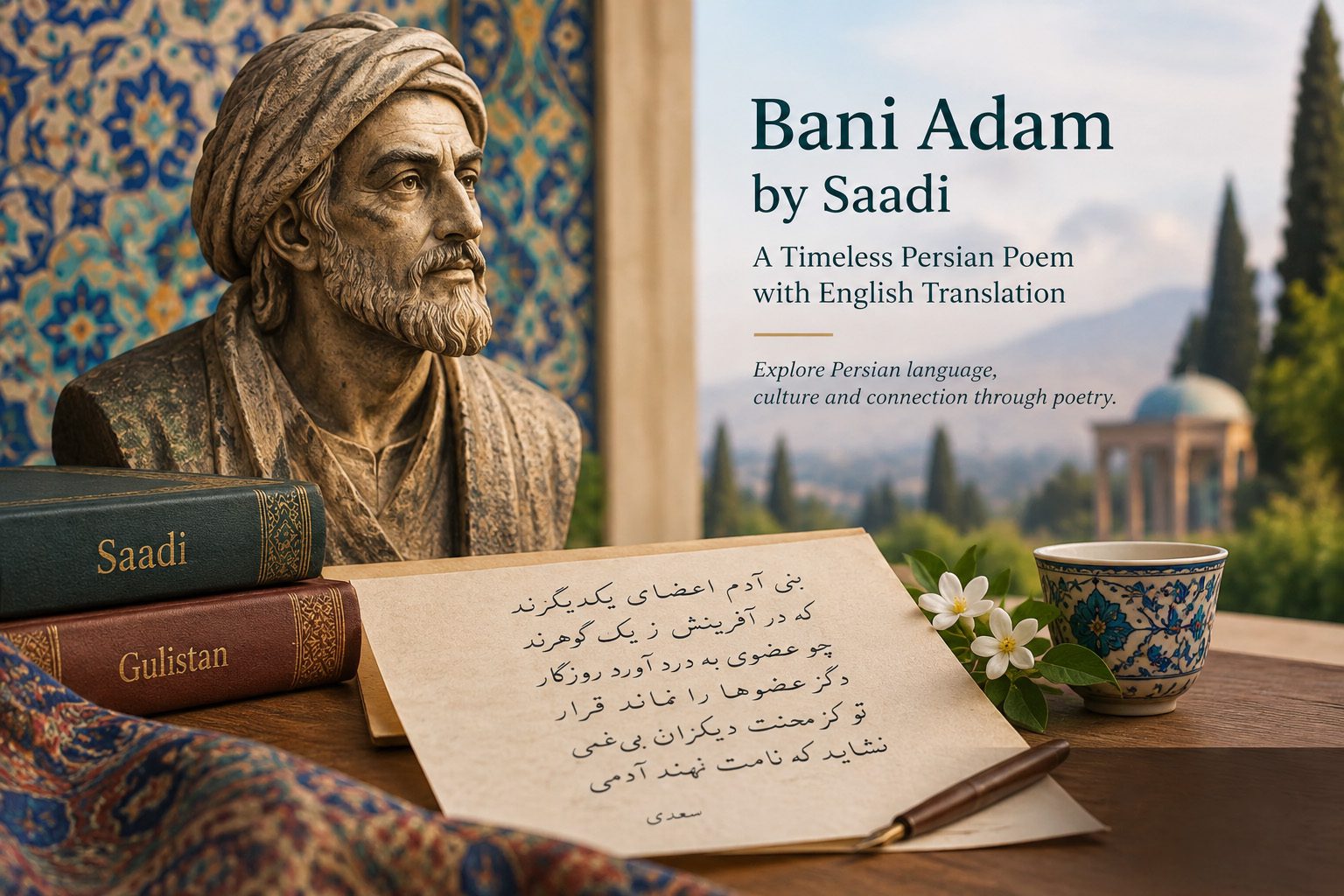
Saadi Shirazi (سعدی شیرازی) is one of the most important poets in Persian literature, and his famous passage Bani Adam (بنی آدم) is a wonderful introduction to Persian poetry, vocabulary, and Iranian culture.
The poem is about something universal: our connection to other human beings.
Even if you are a beginner learning Persian, you can learn several useful Persian words and expressions from these few lines.
Bani Adam by Saadi
The famous passage comes from Saadi’s Gulistan (گلستان):
بنی آدم اعضای یکدیگرند
که در آفرینش ز یک گوهرندچو عضوی به درد آورد روزگار
دگر عضوها را نماند قرارتو کز محنت دیگران بیغمی
نشاید که نامت نهند آدمی
English Translation
A natural English translation is:
Human beings are members of one another,
For they are created from the same essence.When one member suffers because of fate,
The other members cannot remain at peace.If you feel no sorrow for the suffering of others,
You should not be called human.
Translations of classical Persian poetry can vary. A translation can communicate the general meaning, but some of the wordplay, rhythm, and cultural meaning of the original Persian can be difficult to reproduce in English.
This is one of the reasons learning Persian can change the way you experience Persian literature.
Persian Vocabulary in Bani Adam
Let’s look at some of the most useful words in these lines.
بنی آدم — Bani Adam
بنی آدم (bani-ādam) literally means “the children of Adam” and is used to refer to human beings or humankind.
You may recognize:
آدم (ādam) — human / person
The expression بنی آدم is particularly associated with classical Persian literature and is one of the phrases that Persian learners may encounter when reading Saadi.
اعضا — A’zā
عضو (ozv) means member.
Its plural is:
اعضا (a’zā) — members
Saadi uses the image of human beings as different parts of one body. This metaphor makes the central idea of the poem easy to understand even centuries later.
یکدیگر — Yekdigar
یکدیگر (yekdigar) means:
one another / each other
For example:
ما یکدیگر را دوست داریم.
We love each other.
This is a useful word beyond poetry and can appear in everyday Persian as well.
If you are building your basic Persian vocabulary, learning words that appear both in literature and modern Persian is especially valuable. You can continue building this foundation through the Persian Foundations course at Learnoteach.
گوهر — Gowhar
گوهر (gowhar) can mean gem, jewel, or essence.
In Saadi’s poem, گوهر is not simply a physical jewel. It refers to the common essence or origin of human beings.
This is a good example of why translating Persian word by word is not always enough.
Understanding the Meaning of the Poem
The central metaphor is simple:
Humanity is like one body.
If one part of the body experiences pain, the other parts cannot simply ignore it.
Saadi then takes the metaphor one step further:
تو کز محنت دیگران بیغمی
نشاید که نامت نهند آدمی
In other words, if someone is completely indifferent to the suffering of others, Saadi questions whether that person truly deserves to be called human.
This is one reason Bani Adam has remained one of Saadi’s best-known passages. Its central message does not depend on knowing the historical context of 13th-century Persia.
A Persian Grammar Lesson from the Poem
Even a short classical poem can teach you something about Persian sentence structure.
Consider:
دگر عضوها را نماند قرار
The word قرار (qarār) has several meanings in Persian, including peace, calm, stability, or rest.
The expression:
قرار نداشتن
can mean:
to have no peace / to be unable to remain calm
You may encounter this word in modern Persian too.
For example:
دلم قرار ندارد.
A natural translation would be:
“My heart is restless.”
This is a good example of how studying classical Persian poetry can introduce you to words and expressions that continue to have cultural significance in modern Persian.
Why Learn Persian Through Poetry?
You don’t need to become a literature expert to benefit from Persian poetry.
A short poem can introduce you to:
- New Persian vocabulary
- Classical and modern expressions
- Persian sentence structure
- Metaphors and figurative language
- Iranian history and culture
- Persian pronunciation and rhythm
If you are just starting to learn Persian, you can first focus on pronunciation, everyday vocabulary, and simple sentences before gradually moving into classical texts.
For learners who want to build that foundation, Learnoteach’s Persian Foundations course provides a natural starting point before exploring more advanced Persian literature.
Can You Understand Persian Poetry as a Beginner?
Yes—but don’t try to understand every word immediately.
A useful approach is to read the poem three times.
First: Read the Persian text and identify words you already know.
Second: Read the English translation and look up the most important vocabulary.
Third: Return to the Persian original and try to understand the lines without looking at the translation.
You can also listen to Persian being spoken aloud. This helps you become more comfortable with Persian pronunciation and rhythm.
And if you want personalized help with pronunciation or conversation, you can continue from self-study to a one-on-one online Persian lesson with Learnoteach.
Bani Adam and Iranian Culture
Saadi’s words have become much more than a literary passage.
The opening line:
بنی آدم اعضای یکدیگرند
is widely recognized by Persian speakers and is often used when discussing human solidarity and compassion.
The poem also provides an interesting introduction to an important characteristic of Persian culture: the strong connection between literature, everyday language, and ideas about society and human behavior.
For someone learning Persian, this is one of the advantages of studying the language through authentic cultural material.
You are not only learning what a word means—you are learning how Persian speakers have used that word to express ideas for centuries.
Learn Persian Through Saadi
Saadi’s poetry is a great starting point if you want to explore Persian literature while improving your language skills.
Start with a few lines.
Learn the vocabulary.
Listen to the pronunciation.
Then come back to the original Persian and see how much more you understand.
And once you are comfortable with Saadi, you can explore other major Persian poets such as Rumi, Hafez, Ferdowsi, and Omar Khayyam through more Learnoteach Persian poetry lessons.
If your goal is to eventually read Persian literature without depending entirely on English translations, building a strong foundation in Persian is the first step.
Start learning Persian with Learnoteach’s Persian Foundations course, or practice your Persian with a personalized one-on-one online lesson.